2 / 12
Stop 2The porch and the outside of the house
The centenary memorial plaque
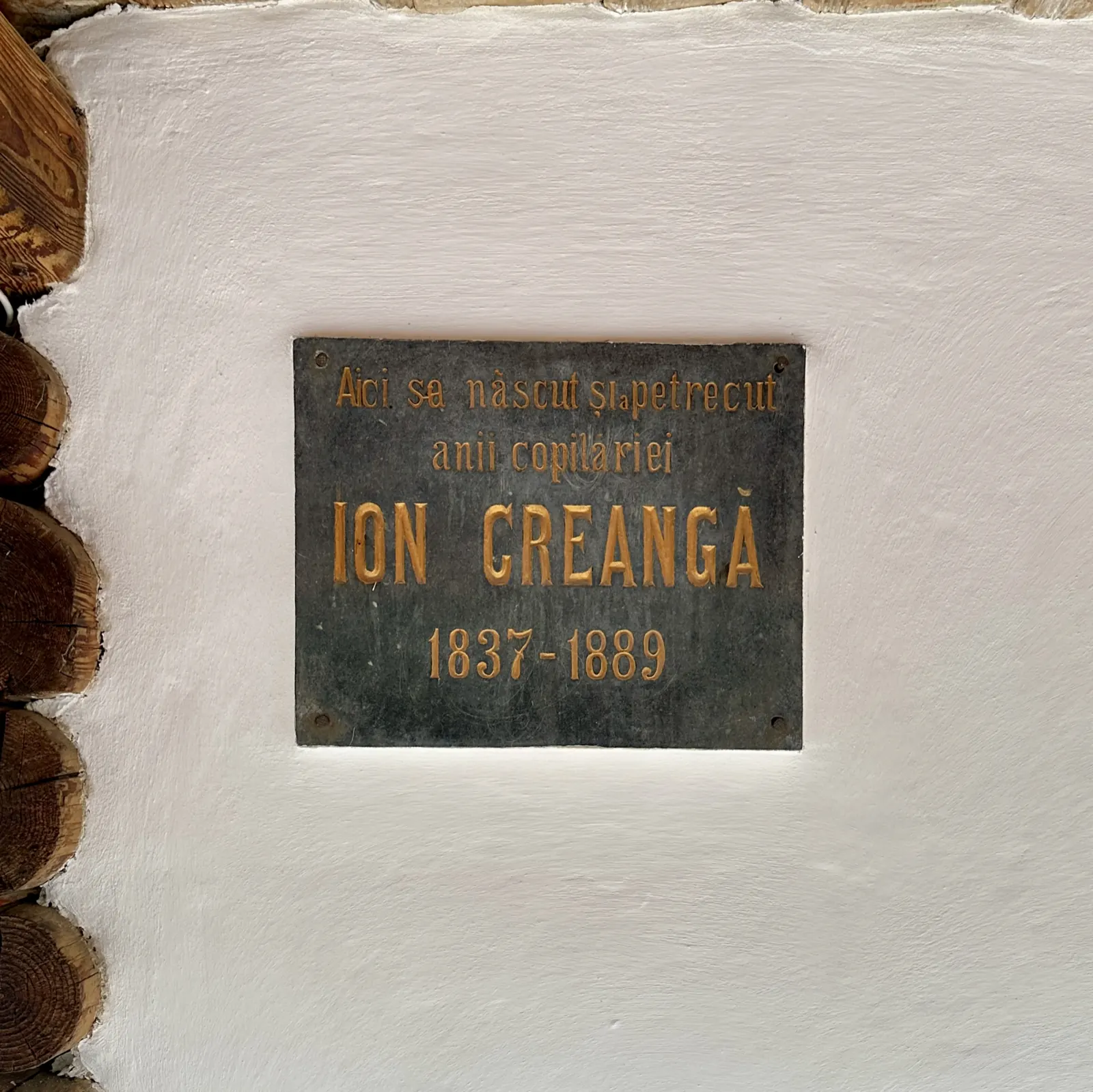
On the east wall of the house you can see a marble plaque. It was placed here in 1937, a hundred years after Ion Creangă's birth, at the initiative of the historian Nicolae Iorga.
- Period
- 1937
- Material
- Marble
- Where it is
- The porch and the outside of the house, the house
Read the textHide the text
Narration text
On the east wall of the house you can see a marble plaque. It was placed here in 1937, a hundred years after Ion Creangă's birth, at the initiative of the historian Nicolae Iorga. It reads: "Here Ion Creangă was born and spent the years of his childhood, 1837–1889."
At that time the house was not yet a museum. The writer's descendants still lived in it, and people of letters were already making pilgrimages to Humulești. In 1944 Sofia Grigoriu, the writer's niece, donated the house to the General Association of Romanian Teachers, "to protect for the future the house in which my own uncle, Ion Creangă, was born and grew up."
The choice was fitting: before becoming a writer, Creangă was a deacon and, above all, a schoolteacher in Iași and an author of primers. Until 1951 the house was an unofficial museum, with visitors giving what they could towards its upkeep. In 1951 the Ion Creangă Memorial Museum officially opened.